
Building Analogue
The story behind Analogue, and why I wanted to build a camera app that makes iPhone photos feel less digital.
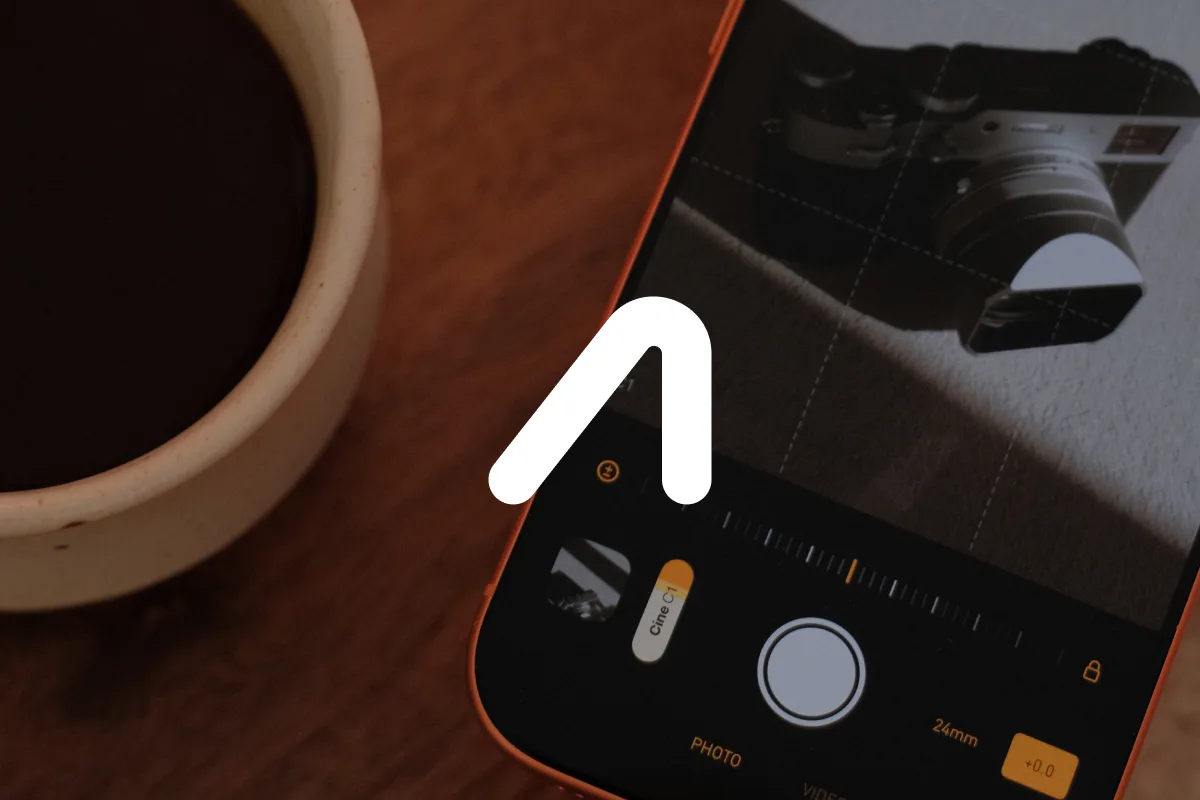
I’ve wanted to write this for a while. Analogue started around this time last year, when I was working on the very first beta, and it feels right for the first post here.
Not as a big launch story or anything too polished, but more as a way to share the journey behind the app, why I built it, and why it ended up meaning a lot more to me than I expected.
Why a new camera app?
I’ve always been passionate about photography.
One of my favourite things to do is explore a city or a new place with a camera in my hand. For years, that camera was rarely my phone. Until around the iPhone 5, phone cameras were still fairly limited, but that was also part of the expectation. You didn’t take them too seriously.
Then they got better. More resolution, better colours, better dynamic range. Suddenly they were not just convenient, they were actually good.
But somewhere around the iPhone 12, something changed for me. Every year the cameras became more capable, but the photos also became more processed. Sharper, brighter, more balanced, more tone mapped, more perfect.
And I get why Apple does this. For most people, it means it’s almost impossible to take a bad photo. The camera handles everything. Shadows are lifted, skies are protected, faces are bright, colours pop.
But if you care about photography beyond just getting a technically correct image, it can start to feel like the phone is making too many decisions for you. The photos are polished to perfection, but somehow less real.
At some point I got so fed up with it that I stopped using the iPhone camera almost completely. I carried a Fujifilm camera with me instead. My iPhone became the device I used to transfer photos, do a bit of editing, and post them online.
I tried other camera apps too, but the results always felt somewhat similar. Different interface, different controls, but still not really the look I wanted.
Discovering Apple Log
I remember watching WWDC when Apple Log was announced.
At first, I didn’t really take it seriously. I also didn’t fully understand what it could mean. It sounded like a video feature, and I was mostly thinking about photography.
Then I downloaded apps like Blackmagic Cam and Kino, and that changed everything.
I had an iPhone 15 Pro at the time and I couldn’t understand how the same camera system could produce such different results. How could photos look so over-processed, while Apple Log video looks so good?
Coming from Fujifilm cameras, I was immediately drawn to the quality of the preview and the fact that I could see the finished result before pressing record. I wasn’t looking at a strange, tone-mapped preview that made it difficult to expose correctly. I was seeing the actual image.
I like getting things right in camera as much as possible. Not because editing is bad, but because it changes how you shoot. When the image already feels right on screen, it makes you want to explore more, try more things, and keep going.
There was something there. The image felt calmer, more natural, less digital. It finally looked like the kind of image I wanted from the iPhone.
The only problem was that it was video.
The first prototype
At one point I started taking one-second videos in Blackmagic Cam or Kino and then taking screenshots from them.
The resolution was awful, but the colours and the overall look were exactly what I wanted. It felt closer to the photos I wished my iPhone could take.
Of course, taking a screenshot from a video gives you a tiny image. Around 2MP at best. Not exactly ideal.
Initially, I thought it would be useful to build a small app that could save a still from the actual 4K video instead of taking a screenshot. Nothing more than that. Just a simple tool for myself.
But once I started playing around with it, I wanted to see how far I could push the idea.
I began saving ungraded stills from Apple Log and bringing them into DaVinci Resolve to create my own grades. It was a messy process, but the results were already much closer to what I wanted than anything I was getting from the default camera.
Super Resolution and grain
One day I was playing around in Lightroom and tried Super Resolution on one of the graded DaVinci exports.
The resulting image was a bit soft, but I actually liked that. It felt less clinical. Less like a phone photo.
Then I added grain to bring back a bit of texture and detail.
That was the moment.
The photo looked better than anything I had ever managed to capture with my iPhone camera. Not technically better in every way, but better in the way that mattered to me. It had the feeling I was looking for.
That’s when I realised this process needed to become an app. Something that could automate all of these steps and turn the iPhone into the kind of camera I wanted to carry.
Analogue 0.1
I’ve been designing and building things, mostly on the web, for over two decades.
I had some previous experience building apps in Xcode, but this was still very new to me. I didn’t know all the answers, but I knew how to break down a problem, test things, and keep pushing until something worked.
It took a few days to figure out the different steps, but eventually I had a very rough version of Analogue that could actually take photos.
These are some of the very first images I captured with it.
The app was extremely basic, everything was held together with a lot of trial and error, and most things I take for granted now simply didn’t exist yet.
But it was the first time in a long time that I looked at my iPhone not just as a device for downloading photos from my camera, but as an actual camera again.
That feeling was enough to keep going.
Validating the idea
Once I had a few photos I liked, I wanted to share them somewhere.
As someone who loves photography, I like Instagram, but I also wanted to post them somewhere people who actually take photos with their iPhone would see them.
I discovered the iPhoneography community on Reddit. Reddit was an app I had only opened a couple of times before, but I saw that people were sharing iPhone photos there, so I posted the first Analogue images and mentioned that I was building an app around this process.
I was not ready for what happened next.
The post became the number one post on iPhoneography, and I started receiving tens of messages from people asking to join the beta.
I replied to every single person who messaged me, set up a Google Form, and asked people to leave their details.
A couple of days later, I had 150 TestFlight testers keen to try this strange new camera app.
I guess we’re building it
Seeing that much interest was incredibly motivating.
For 35 days straight, I pushed a new beta build every single day.
I’m a notorious overthinker, so I set myself very tight rules. Every feature and every design decision only had a v1. Get it as good as I possibly could, but only spend one cycle on it. No endless polishing, no weeks of changing my mind.
I didn’t invite all 150 testers straight away. As the app improved, I slowly got more confident putting it in the hands of more people.
A lot of testers probably didn’t know exactly what they had signed up for, but a few people really did. They couldn’t wait for the next update, tested every feature, found every bug, and sent incredibly detailed feedback.
In all honesty, without the people in the beta, this app would probably never have seen the light of day. I know myself too well.
Building Analogue reignited something I hadn’t felt for a long time. That feeling of working until 3am not because you have to, but because you don’t want to stop.
Launching Analogue
After a few months of working on Analogue, and another couple of weeks getting it through review, Analogue launched on 26 August 2025.
Since then, the app has received many updates. New base LUTs, new editing controls, video support, Fujifilm film simulations, Analogue Studio improvements, and a lot more.
It also reached places I never thought possible, including being mentioned by people and sites I’ve followed for years.
What started as a rough experiment to save better stills from Apple Log video slowly turned into a camera app with its own approach, its own community, and its own point of view.
It has been an incredible year, and I’m genuinely grateful to everyone who supported the project, tested the beta, sent feedback, shared photos, reported bugs, or simply gave Analogue a try.
I’ve made a number of friends through this app, which is something I never expected when I first started building it.
Onwards and upwards.